

 Cart is empty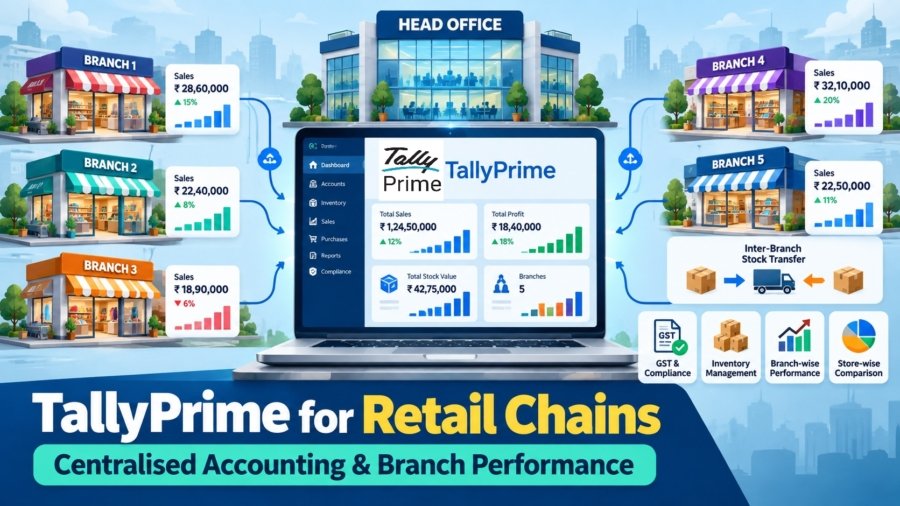
TL;DR
TallyPrime helps retail chains manage centralised accounting, branch-wise sales and profitability, location-wise stock, inter-branch transfers, GST, and consolidated reporting from one structured system. Using Cost Centres, Godowns, POS, Stock Journals, synchronisation, and Group Company, businesses can get a clearer view of each store as well as the overall group.
Why Does Multi-Branch Retail Accounting Become Difficult?
Managing one shop is simple compared with managing five, ten or twenty outlets. In a single store, the owner can usually see daily sales, cash, stock and expenses directly. Once the business expands, information starts coming from different people and different locations.
I have seen retail businesses where one branch sends sales through Excel, another shares stock numbers over WhatsApp, the accountant maintains expenses separately, and the head office prepares a final consolidated report at month-end. The problem is not the lack of information. The problem is that the information is fragmented.
This creates practical issues: reporting gets delayed, branch expenses are difficult to compare, internal stock transfers are missed, physical stock starts differing from system stock, and management gets consolidated figures only after a lot of manual work.
A better approach is to structure the accounting system so that each transaction already carries the information management will need later.
How TallyPrime Centralises Multi-Store Operations
TallyPrime supports different multi-branch structures depending on how the business operates. A business may maintain one central company and identify outlets through Cost Centres and Godowns, or it may maintain separate companies and use Group Company for consolidated reporting. Larger distributed setups may also use multi-site licensing and data synchronisation arrangements where appropriate.
The important point is that there is no single setup that suits every retail chain. Before configuring the system, I would first map five things:
- Legal entities
- GST registrations
- Branches or stores
- Stock locations or warehouses
- Reports management wants to see
Once these are clear, the accounting structure becomes much easier to design.
When Should You Use Cost Centres for Branch-Wise Tracking?
If multiple stores are part of the same accounting company and management wants to compare revenue and expenses branch-wise, Cost Centres can be very useful.
Each outlet can be created as a Cost Centre, and sales, rent, electricity, salaries, local marketing expenses and other relevant transactions can be allocated to the correct branch. This allows management to analyse store-level performance without necessarily creating a separate company for every outlet. For example, instead of seeing only: Total Sales: ₹2.50 crore, management can analyse:
| Branch | Sales | Expenses | Profitability |
| Store A | ₹48 lakh | ₹6.2 lakh | Strong |
| Store B | ₹39 lakh | ₹4.1 lakh | Stable |
| Store C | ₹52 lakh | ₹8.7 lakh | Needs review |
| Store D | ₹34 lakh | ₹3.5 lakh | Improving |
This is much more useful than simply knowing which store has the highest sales.
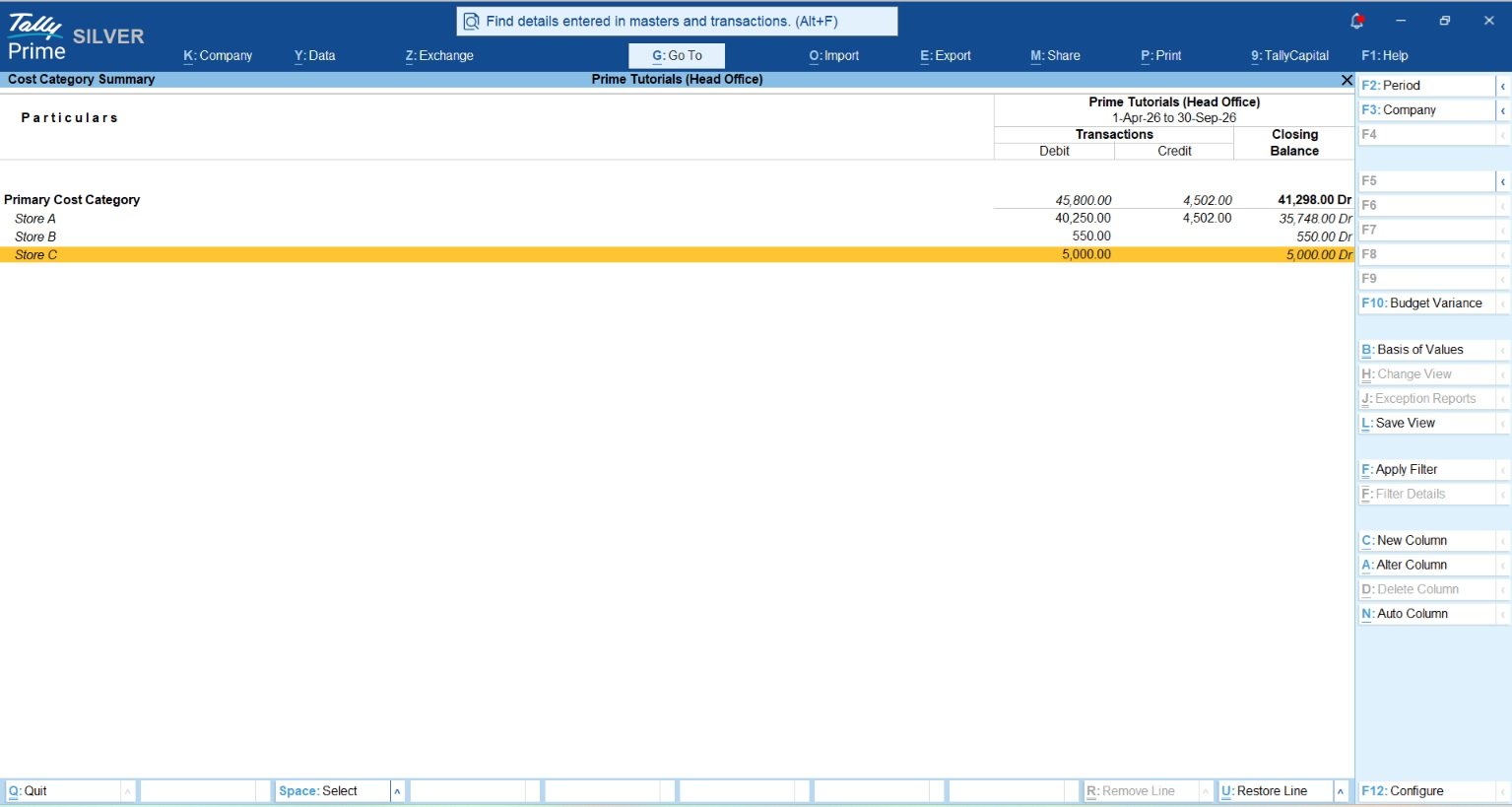
A branch may have higher turnover but also much higher rent, discounts, staffing costs or inventory carrying cost. That is why I always recommend looking at branch profitability, not just branch sales.
How Are Branch-Wise Profit & Loss Compared?
Once outlets are mapped properly through Cost Centres, branch-level analysis becomes much easier. TallyPrime’s columnar reporting features help compare different Cost Centres or periods side by side. The source material also highlights Auto Column and comparative column views for this purpose.
From a management point of view, I would normally review these figures for every store:
- Sales
- Gross profit
- Direct expenses
- Operating expenses
- Discounts
- Stock value
- Receivables
- Cash and bank collections
- Net contribution
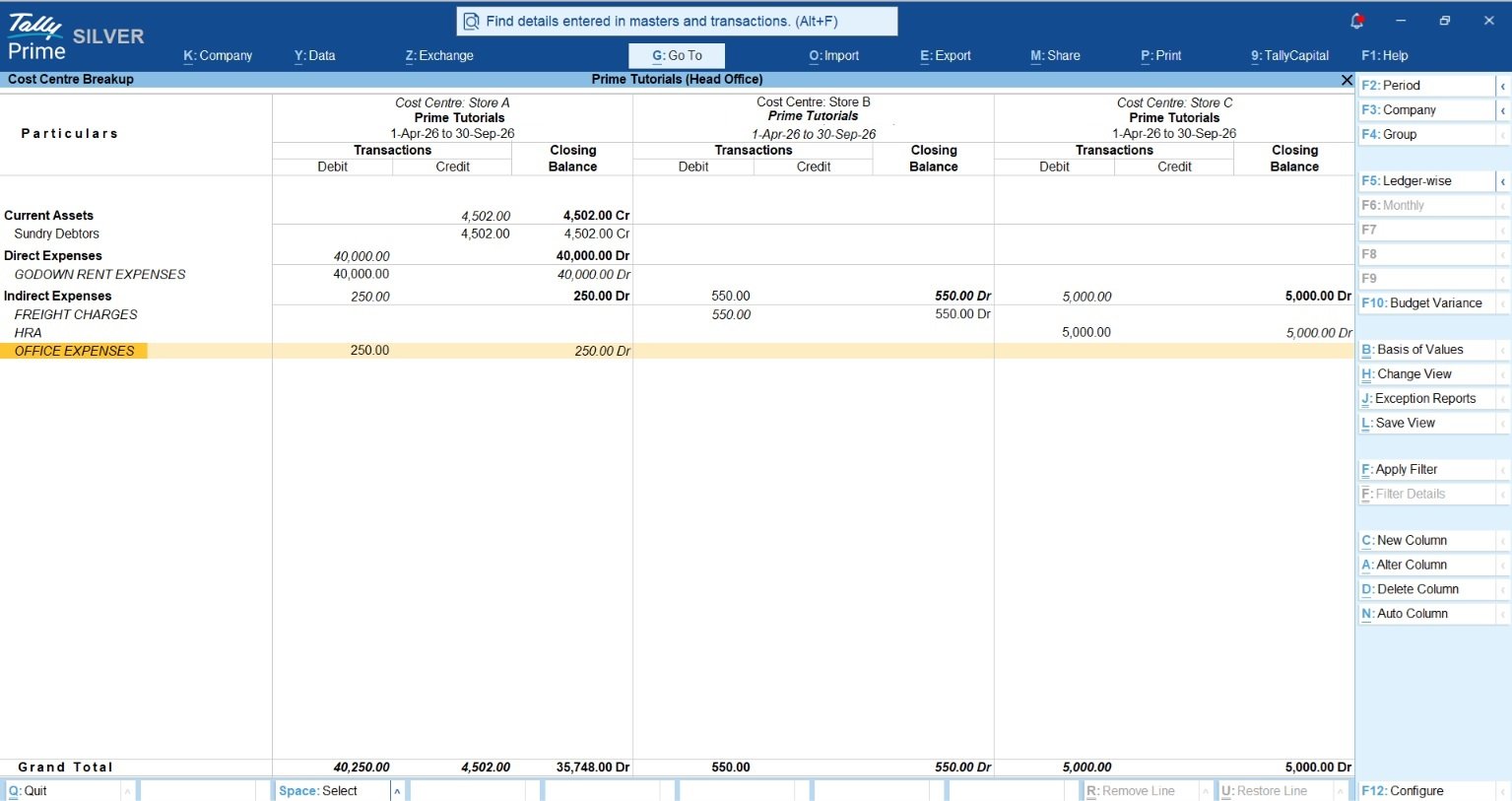
You do not need twenty KPIs for every store. Five or six reliable measures reviewed consistently are often more useful than a complicated dashboard that nobody checks.
Where Does Group Company Help in TallyPrime?
This is an important feature for retail chains that maintain separate Tally companies for different branches, legal entities, regions or business units.
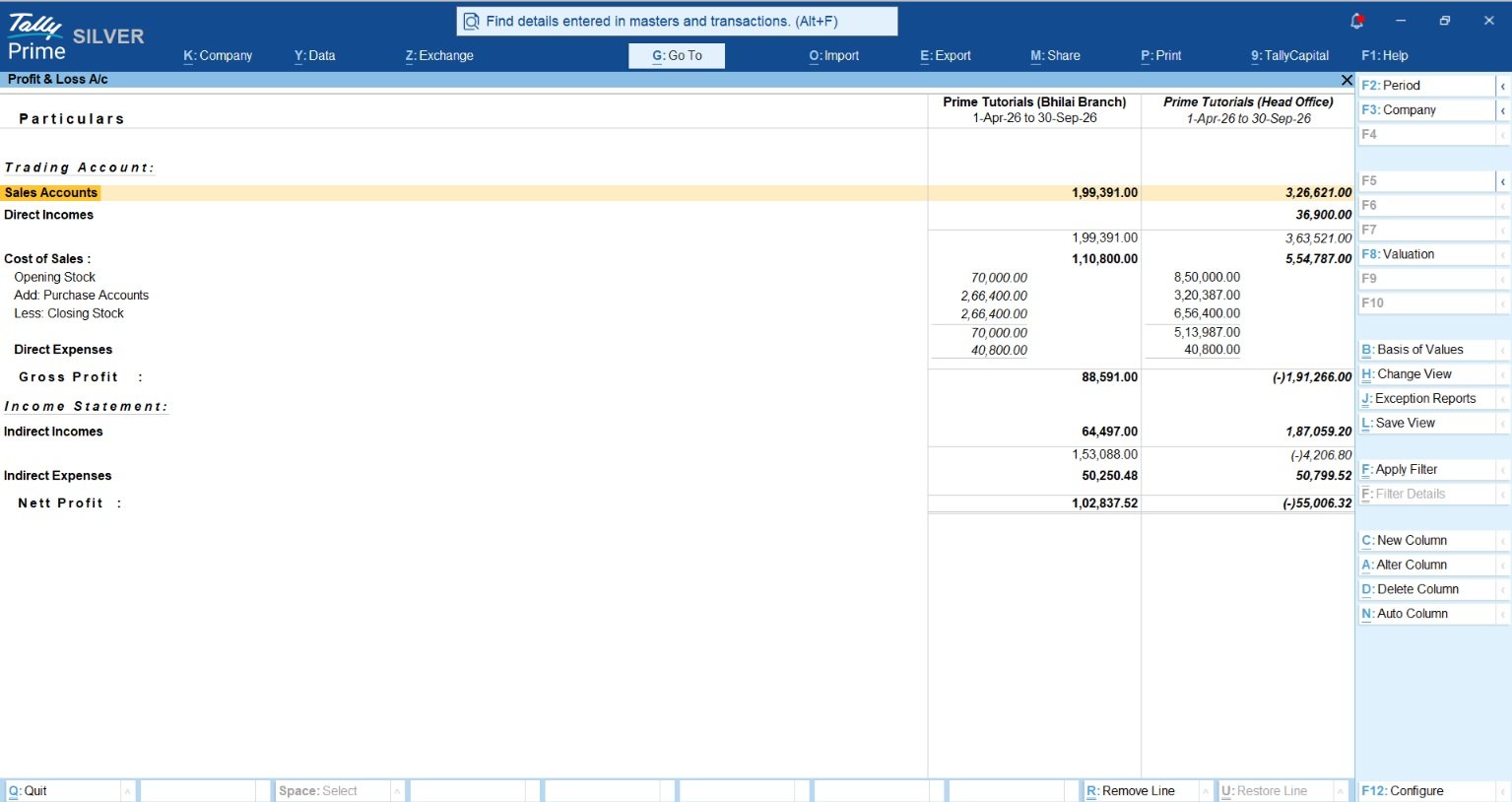
TallyPrime’s Group Company feature allows management to group multiple companies and view consolidated reports across them. This is useful when each branch or entity needs to maintain separate books, but the owner or finance team still wants one combined financial view.
For example, suppose a retail group maintains:
- Retail North Pvt. Ltd.
- Retail Central Pvt. Ltd.
- Retail South Pvt. Ltd.
Each company may maintain its own transactions, ledgers, stock and statutory records. Instead of manually combining Balance Sheets and Profit & Loss reports in Excel, management can create a Group Company and view consolidated financial information for the group.
This can be useful for:
- Consolidated Balance Sheet
- Consolidated Profit & Loss
- Group-level outstanding analysis
- Combined financial position
- Comparison across operating companies
- Management review across business units
The Group Company concept is also referenced in the source material as one of the ways head office can aggregate financial information across units.
One important distinction should be clear: Group Company is mainly for consolidated viewing and analysis. It does not merge all underlying companies into one statutory entity. GST returns, statutory compliance and books that legally belong to separate registrations or companies still need to remain correctly maintained at their respective entity level. This is especially useful when a retail group has multiple legal entities but the promoter wants one management view.
Cost Centre or Group Company: Which One Should a Retail Chain Use?
This depends on the business structure. If several stores operate under one company and management mainly needs branch-wise sales, expenses and profitability, using Cost Centres + Godowns/Locations may be the cleaner approach.
If stores or regions maintain genuinely separate Tally companies because of legal, operational or organisational requirements, Group Company can provide a consolidated management view.
In some businesses, both can be used. For example, one legal company may have five outlets tracked through Cost Centres, while the overall group may have three separate legal companies combined through Group Company. The software structure should follow the business structure, not the other way around.
How Can Inventory Be Tracked Across Multiple Stores?
For retail businesses, branch-wise stock control is just as important as accounting. Each outlet, warehouse or distribution point can be structured as a separate Godown/Location. This enables management to see stock quantities location-wise instead of only seeing one combined stock figure.
Imagine this situation:
- Store A has 120 units of an item and sells only two units per day.
- Store B has only eight units left but is selling fifteen units per day.
Without location-wise visibility, the purchase team may order more stock even though usable stock is already available at another store.
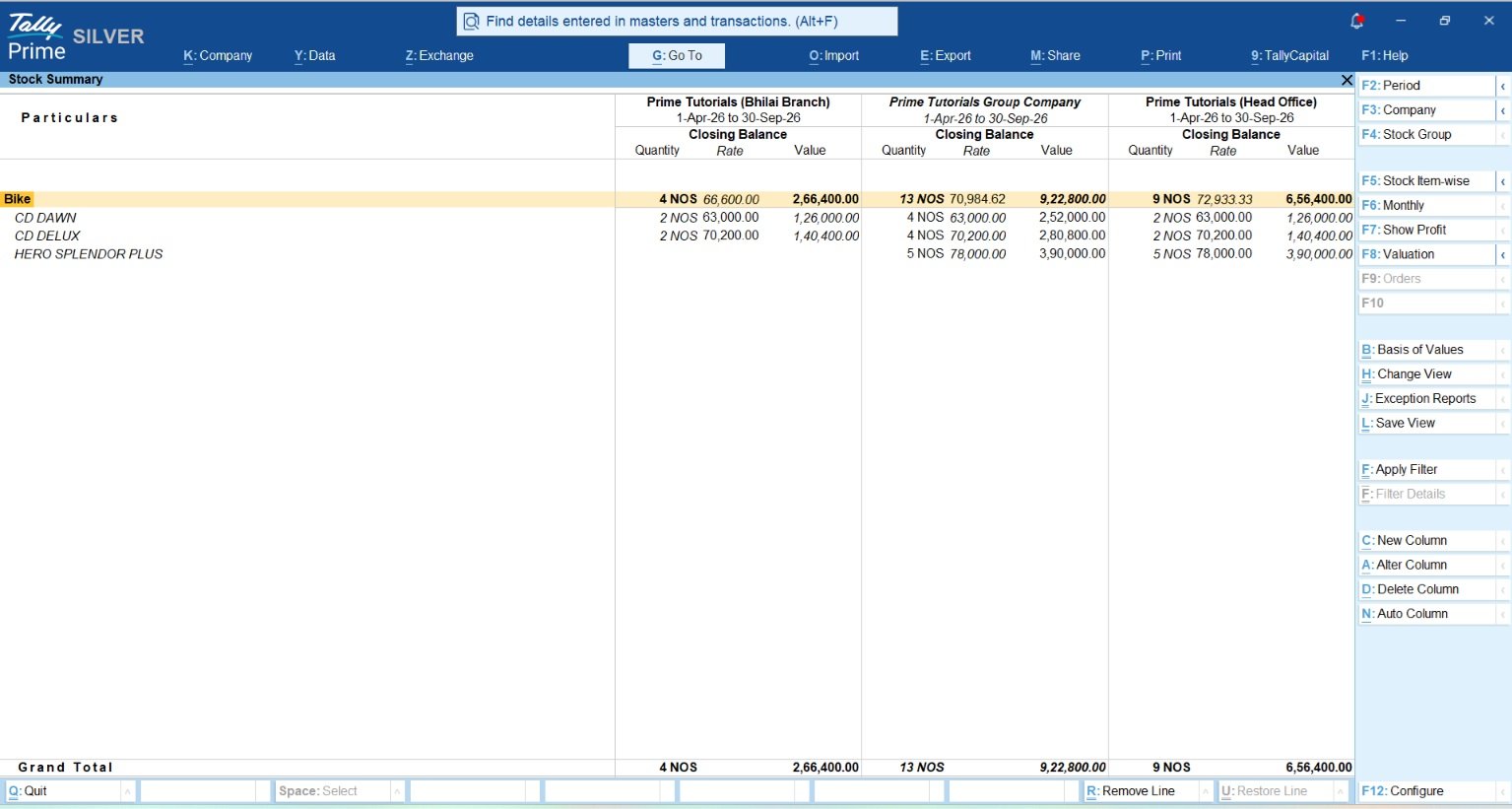
With proper branch-level stock tracking, management can first transfer the item from Store A to Store B instead of purchasing again. This reduces unnecessary inventory and improves working capital.
How Should Inter-Branch Stock Transfers Be Recorded?
Every physical movement of stock should also be reflected in the system. TallyPrime can record transfers between locations through Stock Journal-based workflows. For longer movements, businesses can even use an intermediate transit location so stock that has left one warehouse but has not yet reached the destination remains visible.
For example: Central Warehouse → Transit → Store 4. This is more reliable than reducing stock at the source branch and waiting for the destination branch to enter it later.
I have seen cases where total company stock looked correct but branch-wise stock was wrong because internal transfers were either entered late or not entered at all.
A simple rule helps:No physical stock transfer without a corresponding system transfer. That one discipline can prevent many branch-level inventory problems.
Can TallyPrime Support Retail POS Billing Across Stores?
Yes. Retail businesses can configure Point of Sale voucher types and different payment modes depending on their requirements. The source material also refers to POS voucher setups with cash, card and wallet-style payment options across stores. This becomes useful when a retail chain wants standardisation. Instead of every branch using a different billing method, the business can define common voucher structures, item masters, tax settings and payment processes.
From my experience, standardisation is often more important than adding new features. If ten branches use ten different methods for entering the same type of transaction, consolidated reporting will always become difficult.
How Can Store-Wise Sales Performance Be Monitored?
Once transactions are tagged correctly, management should review each store regularly. A practical store performance sheet can include:
| Branch | Sales | Growth | Closing Stock | Expenses | Gross Profit |
| Store A | ₹38L | +8% | ₹12L | ₹4.2L | ₹9.1L |
| Store B | ₹31L | +15% | ₹7L | ₹2.8L | ₹8.4L |
| Store C | ₹42L | -3% | ₹18L | ₹5.1L | ₹8.8L |
| Store D | ₹27L | +6% | ₹6L | ₹2.4L | ₹7.2L |
The purpose of such a report is not only ranking stores. It is to generate better questions.
Why is Store C holding ₹18 lakh of stock?
Why is Store B growing faster with lower inventory?
Why are expenses increasing in Store A?
Does a branch need more stock, fewer SKUs, a pricing change, or tighter expense control?
Good accounting should help management ask these questions early.
How Does Data Synchronisation Help Distributed Retail Stores?
Where branch users operate from geographically separate locations, businesses may require structured synchronisation or multi-site arrangements depending on the infrastructure.
The reference material mentions both Tally.NET-assisted synchronisation and private-network approaches for distributed operations. The important business benefit is that the head office should not wait until the end of the month for someone to email a data file. The closer branch data is to the central system, the faster management can review sales, stock and financial position. However, the exact setup should be decided based on transaction volume, network reliability, branch autonomy and security requirements.
How Should GST Be Managed Across Multiple Branches?
This part should be designed carefully. Some retail businesses have several stores under one GST registration. Others may have different GSTINs in different states or legal entities.
The accounting structure must reflect the actual GST structure of the business. The reference material highlights GST reporting such as GSTR-1, GSTR-3B and annual return-related workflows as important parts of multi-branch management.
The key principle is: Centralise management visibility, but do not lose statutory separation.
If different legal entities or GSTINs must maintain separate books or return data, those requirements should remain intact even if management later views consolidated reports through Group Company. Before implementation, clearly map:
- Legal entity
- GSTIN
- State
- Branch
- Stock location
- Accounting company
This avoids confusion later.
How TallyPrime Manages GST Across Multiple Branches
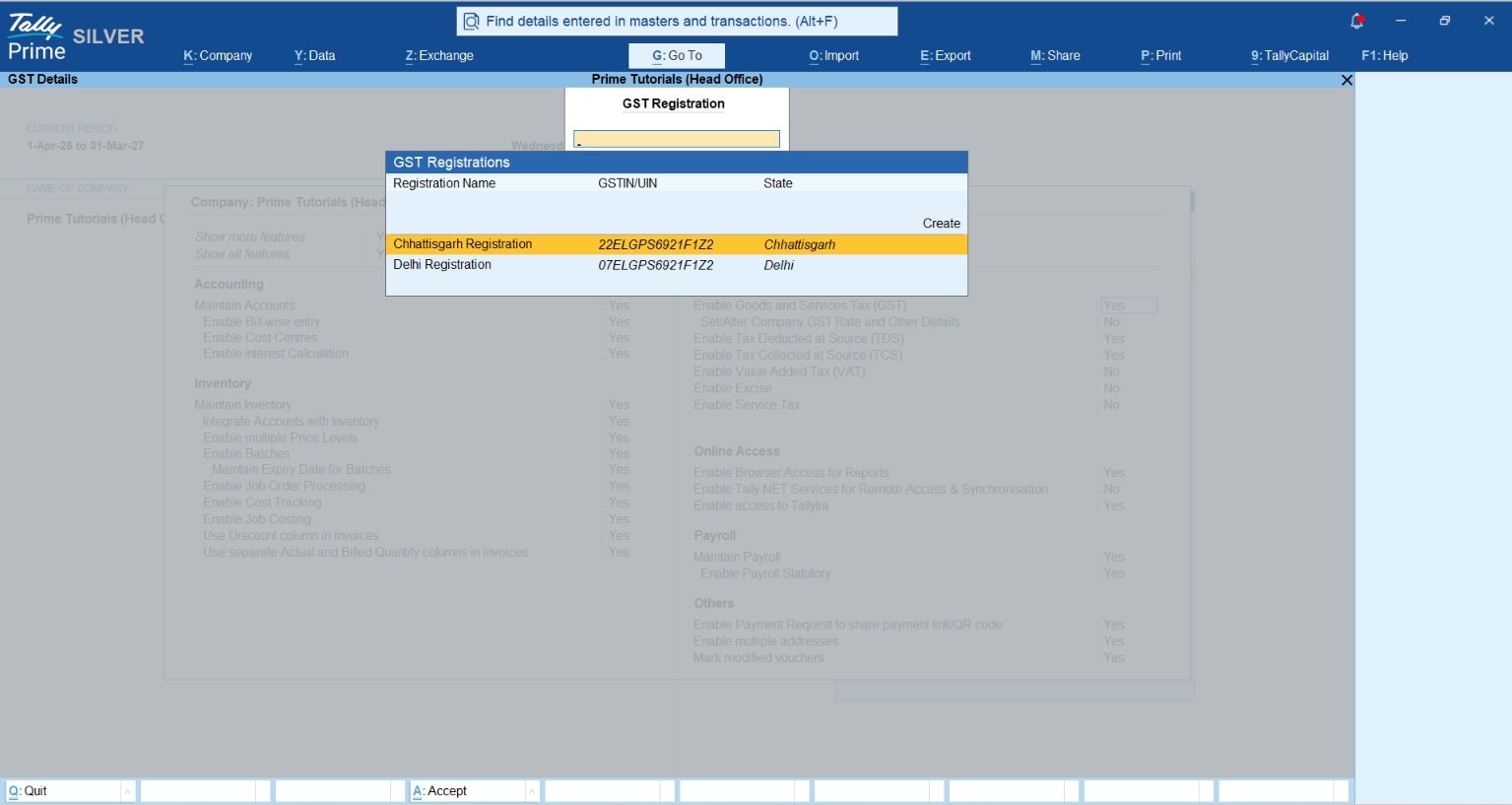
TallyPrime can manage multiple GST registrations within the same company, which is useful when a business has branches or units registered under different GSTINs. Businesses can create multiple GST registrations, record transactions under the appropriate GSTIN, and view or prepare GST returns for each registration separately.
- Multiple GSTINs in One Company: Each branch or unit with a separate GST registration can be maintained under the same TallyPrime company.
- GSTIN-Wise Transactions: While recording vouchers, users can select the relevant GST registration so that transactions are reported under the correct GSTIN.
- Separate GST Returns: GSTR-1 and GSTR-3B can be viewed and prepared for a specific GST registration, even when multiple GSTINs are maintained in the same company.
- Centralised Visibility: Management can maintain consolidated company-level reporting while keeping GST transactions and return-related data correctly mapped to the relevant registrations.
This allows a retail chain to centralise accounting and management visibility in TallyPrime without losing GSTIN-wise statutory separation, which becomes especially useful as the business expands across branches and states.
Also read about TallyPrime Cloud Access in 2026: Remote Access, Real-Time Collaboration and What’s Actually Changed
Practical Example: A 10-Store Retail Chain
The reference example describes an apparel chain with one central warehouse and ten stores. Each outlet was mapped to a Cost Centre, stock movements were recorded through Stock Journal vouchers, and store-level reporting was centralised.
A similar structure is practical in real businesses. Suppose a retailer has:
- 1 Head Office
- 1 Central Warehouse
- 10 Retail Stores
The business can structure:
Cost Centres: Store 1 to Store 10
Godowns: Central Warehouse + individual stores + transit location
POS: Standardised retail billing structure
Stock Transfers: Stock Journal
Reporting: Branch-wise sales and profitability
Group Company: Used if different operating entities maintain separate companies
The key is that daily transactions should automatically support future reporting. Management should not need to rebuild the entire branch performance report manually at month-end.
What Should Retail Owners Review Every Month?
In my experience, retail management does not need dozens of reports. A short management pack is more useful.
- Branch-Wise Sales: Compare each branch against previous months and the same period last year where relevant.
- Branch-Wise Profitability: High sales do not always mean high profit.
- Location-Wise Stock: Identify shortage, excess stock and branch imbalance.
- Stock Ageing: Identify inventory that is not moving.
- Expense Comparison: Compare rent, salaries, electricity, discounts, logistics and local promotion costs.
- Receivables: Important especially for branches handling B2B or institutional sales.
- Inter-Branch Transfers: Check whether some branches repeatedly depend on stock movement from others.
- Consolidated Group Performance: Where multiple companies are maintained, use Group Company reporting to understand the overall financial position.
What Should Be Standardised Before Centralising?
Technology cannot fix inconsistent accounting habits automatically. Before centralising a retail chain, I would first standardise these areas:
- Ledger Names: Do not allow branches to create “Electricity”, “Power Bill”, “Electric Charges” and “Electric Expense” for the same cost.
- Stock Masters: Use one naming convention and one item code system.
- Branch Codes: Every transaction should clearly identify the correct outlet.
- Godowns: Maintain a fixed structure for stores, warehouses and transit locations.
- Voucher Types: Standardise sales, stock transfer and other operational entries.
- Cost Centres: Define branch names consistently.
- GST Masters: GSTIN, state and tax classifications must be correct.
- User Rights: Branch teams should have access based on their responsibilities.
Standardisation is what makes centralised reporting trustworthy.
“Centralised accounting is not about putting every branch into one file. It is about giving management one reliable business picture without losing visibility of individual stores.”
Conclusion: What Should a Growing Retail Chain Do Next?
If you manage multiple retail outlets, ask yourself one question: Can I see the sales, stock, expenses and profitability of every store in one system without asking someone to prepare another Excel report?
If the answer is no, the issue may not be lack of data. It may be the way your accounting structure has been designed. A practical checklist would be:
- Standardise ledger and stock masters
- Map every branch clearly
- Set up Cost Centres where branch-wise profitability is required
- Set up Godowns for location-wise inventory
- Record all inter-branch stock transfers systematically
- Standardise POS billing
- Review branch profitability monthly
- Monitor stock ageing and reorder requirements
- Maintain GST registrations correctly
- Use Group Company where separate Tally companies need consolidated management reporting
- Define user access and synchronisation processes carefully
TallyPrime can be an integral business management software for a retail chain. When designed properly, it can connect sales, inventory, branch expenses, profitability, GST and consolidated reporting into one structured management process. And in my experience, this becomes more valuable with every new store the business opens.
Read more about How to Manage Multi-Branch Accounting for Indian Businesses
Frequently Asked Questions
Can TallyPrime manage accounting for multiple retail branches?
Yes. Depending on the structure, branches can be tracked through Cost Centres, Godowns, separate companies, Group Company and other multi-location configurations.
Can I see branch-wise Profit & Loss in TallyPrime?
Yes. Branches can be mapped to Cost Centres and analysed through Cost Centre and comparative financial reports.
Can stock be tracked separately for each retail store?
Yes. Stores and warehouses can be configured as Godowns/Locations so stock quantities and movement can be reviewed separately.
What is Group Company in TallyPrime?
Group Company allows multiple Tally companies to be grouped for consolidated financial reporting while the underlying companies continue maintaining their own books.
Should I use Group Company or Cost Centres for my branches?
Use Cost Centres when branches operate inside one company and need internal performance tracking. Group Company is more suitable when separate Tally companies must be viewed together.
Can TallyPrime record stock transfers between branches?
Yes. Stock Journal-based workflows can record movement from one Godown or Location to another and help maintain accurate branch stock.
Can TallyPrime support POS billing across multiple stores?
Yes. POS voucher types can be configured for retail billing and payment modes according to the business requirement.
Can management access branch reports remotely?
Remote and connected access options can be used depending on the TallyPrime setup, licensing, user permissions and infrastructure.
