

 Cart is empty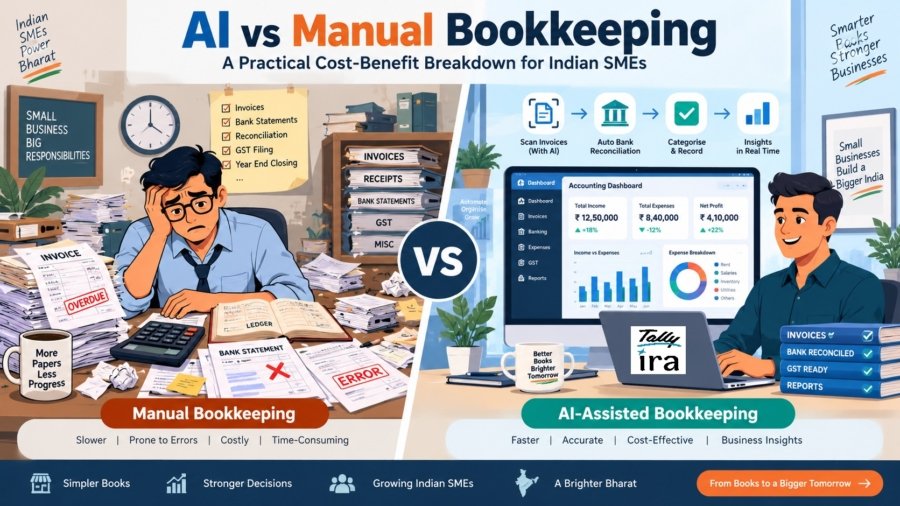
TL;DR:
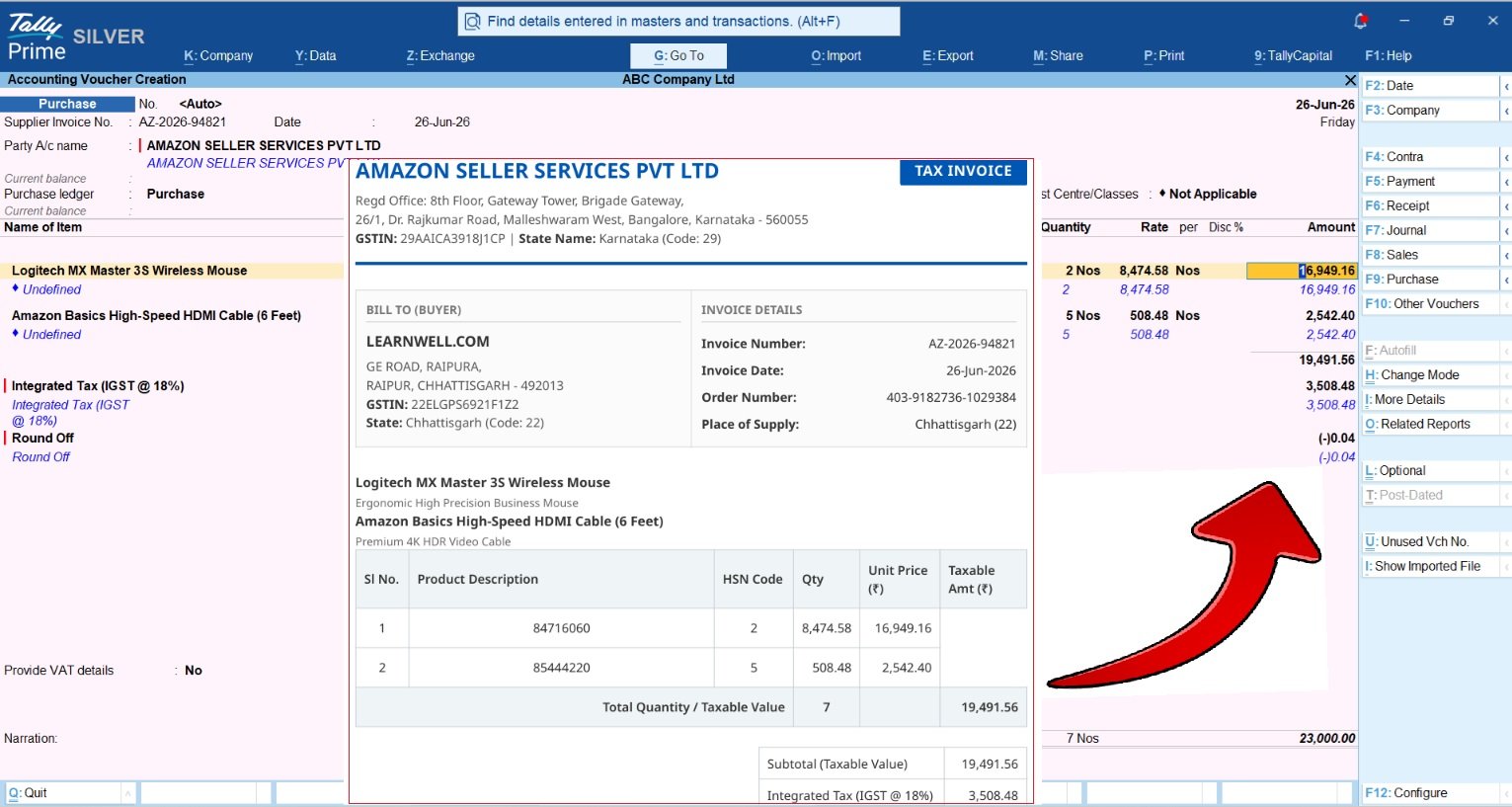
Manual bookkeeping may appear cheaper because there is no visible automation cost. But the real monthly cost includes repeated data entry, delayed error correction, bank reconciliation, report preparation, and the owner’s time spent waiting for answers, and the high risk of costly GST notices. AI-assisted bookkeeping can reduce this repetitive work across the full accounting cycle. For example, Docs by Ira can extract details from supplier invoices and prepare draft vouchers in TallyPrime, bank reconciliation tools can reduce line-by-line matching, and dashboards can make key numbers easier to review.
Introduction: Why Traditional Bookkeeping is Breaking Your Business
Yes, your “free” manual process is likely the most expensive line item in your P&L.
In my 20 years as a Senior Accountant and SME consultant, I’ve seen hundreds of business owners focus solely on top-line sales while their back offices leak money through “invisible” holes. While UPI and digital payments now move money in seconds, manual recording remains stubbornly retrospective. If you only understand your cash flow 30 days after the month ends, you aren’t managing a business, you’re reading a history book. In today’s high-velocity Indian economy, this lag doesn’t just hinder growth; it invites regulatory disaster.
Let’s understand the cost of using AI for bookkeeping vs Manual bookkeeping.
Why Does “Free” Manual Bookkeeping Cost So Much?
The belief that manual bookkeeping has zero cost is a dangerous misconception. My audit of mid-sized firms consistently reveals five “Hidden Cost Layers”:
- Direct Labor: A junior accountant typically spends 70% of their time on pure data transcription – typing names, GSTINs, and line items from paper to screen.
- The Rework Loop: Manual entry carries an error rate of 1% to 8%. Benchmarks show that correcting a single mistake (locating, reversing, and re-posting) consumes 2 to 4 hours of staff time.
- Missed Incentives: Slow manual processing often misses the 10-day window for early payment discounts (usually 1-2%), which can cost a firm with ₹50 Crores in payables up to ₹30 Lakhs annually.
- GST Interest Penalties: Under Section 50(3) of the CGST Act, mismatched ITC triggers a steep 18% per-annum interest penalty.
- The MSMED Act Trap: Under the 45-day payment rule (Section 15 of the MSMED Act), failing to track and pay MSME vendors on time leads to the disallowance of that expense from your taxable income, creating a massive, unexpected tax hit.
Bold Callout: Manual bookkeeping isn’t just a “lag”, it is an active drain on your working capital through denied credits and disallowed expenses.
Can AI Actually Manage Indian GST Complexity?
The GST 2.0 Reforms, implemented on September 22, 2025, have turned compliance from a nightmare into a “simplified sorting game” for machines. By moving from four complex slabs to primarily two main rates (5% and 18%), the government essentially optimized the tax code for AI.
Previously, items were scattered across slabs based on technical specs. Now, with 99% of items from the 12% slab moving to 5% (like toothpaste and pressure cookers) and luxury/electronics settling into predictable 18% or 40% brackets, AI categorization is 300% faster.
Furthermore, the new Invoice Management System (IMS) requires you to take active control of your dashboard. You must now:
- Accept: Validates the invoice for GSTR-2B and claims ITC.
- Reject: Flags incorrect GSTINs or duplicate bills.
- Pending: Defers claims for goods not yet received.
Advisor Warning: If you remain manual and fail to take action, the system applies a “deemed accepted” status. This exposes you to wrongful ITC claims and automated tax notices that are a nightmare to resolve.
TallyPrime and “Docs by Ira”: How Does It Change Your Daily Routine?
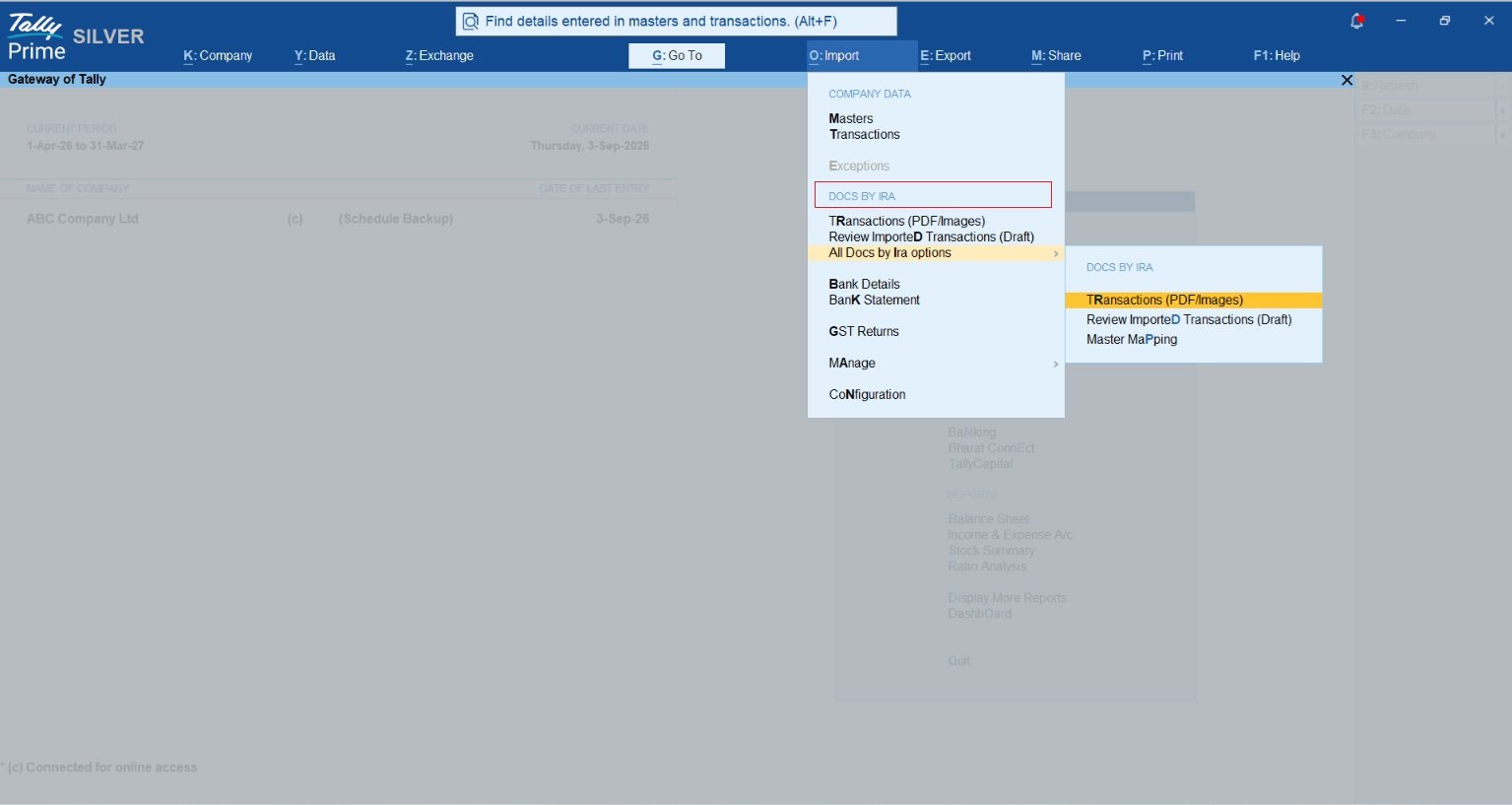
TallyPrime has integrated Docs by Ira, an AI-powered document processor that reads digital invoices and auto-posts draft transactions.
- Bulk Processing: You can upload PDF, JPEG, and PNG formats via the TallyIra mobile app.
- Connected Banking: Direct integration with ICICI, Axis, SBI, and Kotak allows for real-time reconciliation within the ledger, eliminating line-by-line manual matching.
Comparison: The Quantitative Cost-Benefit Model
For a mid-sized enterprise with a ₹5 Crore turnover, here is the annual financial reality:
| Metric | Manual Bookkeeping | AI-Assisted Bookkeeping |
| Annual Junior Labor Cost | ₹1,68,750 | ₹34,687 |
| Senior Review/Owner Labor | ₹2,40,000 | ₹30,000 |
| GST Mismatch Interest & Penalties | ₹23,500 | ₹0 |
| Missed ITC Assets | ₹97,200 | ₹0 |
| Forfeited Supplier Discounts | ₹36,000 | ₹0 |
| Total Annual Cost | ₹7,31,128 | ₹92,693 |
| Annual Reclaimed Hours | 0 Hours | 1,278 Hours |
The ROI Calculation: An annual software investment of approximately ₹16,756 (including GST) yields over ₹6.3 Lakhs in savings a staggering 3,810% ROI.
Also read How Businesses Without a Finance Team Use TallyPrime’s Budgeting Features to Control Spending
Example: From Paper Chaos to Digital Clarity
Example 1 (The CA’s Growth): “Rajesh,” a CA in Raipur, was capped at 25 clients because his team was drowning in data entry. By adopting TallyPrime, his team shifted from “typing” to “auditing.” He now manages 40 clients with the same staff, increasing his practice revenue without increasing his payroll.
Example 2 (The Manufacturer’s Protection): A textile exporter in Tirupur struggled with fabric tax slab confusion. After the September 22 slab changes, they implemented AI-driven matching. They achieved 99% GST accuracy, entirely avoiding the 18% interest charges that previously eroded their export margins.
Conclusion & Actionable Framework
The shift to AI is a move from “cost-saving” to “value-reclaiming.” Stop paying professional salaries for clerical typing.
3-Step Transition Plan:
- Audit: Identify your biggest bottleneck (usually purchase entry or bank reconciliation).
- Pilot: Implement TallyPrime Docs by Ira for that specific process for 30 days.
- Parallel Run: Track both systems for 4 weeks. Compare AI suggestions against manual entries to build confidence before fully decommissioning the paper trail.
Read more about Docs by Ira
“For Indian SMEs, the real cost of bookkeeping isn’t the software, it’s the Rupees lost in manual errors and the hours stolen by repetitive data entry.”
Frequently Asked Questions (FAQs)
Will AI replace my accountant?
No. It is a capacity multiplier. It handles the repetitive “grunt work,” allowing your accountant to focus on tax planning, MSME compliance, and financial advisory.
Does it handle the new 40% luxury GST rate?
Absolutely. AI excels at identifying distinct, high-value items like luxury vehicles or tobacco, which now carry clear, automated classification rules.
What if the AI makes a mistake?
Human-in-the-loop oversight is mandatory. AI entries are “drafts” that require a final one-click approval from your staff, ensuring you remain in total control.
Is AI bookkeeping cheaper than manual bookkeeping?
It is certainly cheaper when transaction volume is high and the time saved on entry, reconciliation, corrections, and reporting exceeds the tool’s total cost.
How can an SME calculate the benefit of bookkeeping automation?
Measure current hours, staff cost, rework, and closing delays. Compare them with the tool cost and the same figures after a four-week pilot.
Which bookkeeping task should an SME automate first?
Start with a repetitive, high-volume task that has clear rules, such as supplier invoice entry, bank data preparation, or transaction matching.
