

 Cart is empty
TL;DR
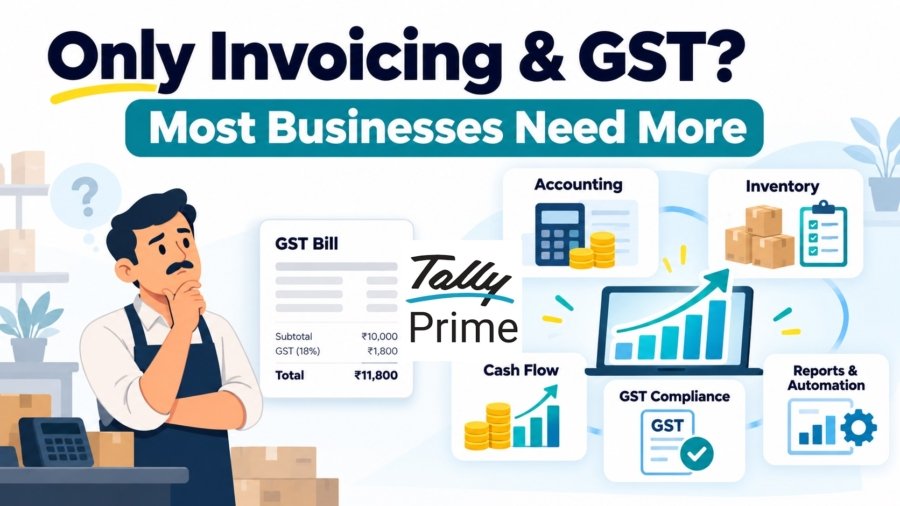
Basic invoicing software is useful for creating GST bills, but growing Indian businesses need more than billing to manage their finances effectively. As operations expand, tracking customer outstanding payments, managing inventory, monitoring supplier dues, and maintaining GST compliance become increasingly important. Requirements such as GSTR-2B reconciliation, GST Invoice Management System (IMS), e-invoicing, MCA audit trails, and MSME payment rules also demand accurate accounting records. A complete accounting solution like TallyPrime helps businesses manage accounting, inventory, banking, and statutory compliance in one system. With additional automation and AI tools such as Docs by Ira, businesses can reduce manual data entry, improve accuracy, save time, and gain better control over their financial operations.
Introduction: The “Basic Billing” Trap
In my 20 years of accounting experience across manufacturing, pharmacy, retail, construction, automobile dealerships, e-commerce, and service industries, I have often seen business owners start with one simple requirement: “I only need basic invoicing and GST billing.”
For a small business with limited transactions, a basic billing application may be sufficient for some time. It can help create invoices, calculate GST, and maintain simple customer records. However, as the business grows, generating invoices is only one part of managing its finances.
Business owners also need to know how much customers owe them, when supplier payments are due, whether sufficient stock is available, and how much profit the business is actually making. Without proper accounting and reporting, businesses may face several challenges:
- Outstanding Payments: Customers may delay payments, affecting cash flow.
- Inventory Problems: Incorrect stock records can cause shortages or excess purchases.
- GST Mismatches: Differences between purchase records and GST portal data may create Input Tax Credit (ITC) issues.
- Supplier Payment Delays: Missing payment deadlines may damage supplier relationships and create additional compliance concerns.
This is why many growing Indian businesses eventually need more than basic invoicing. They need a business management software that connects billing with financial records, inventory, banking, and compliance.
What Happens When Customers Don’t Pay? (Outstanding Tracking & Cash Flow)
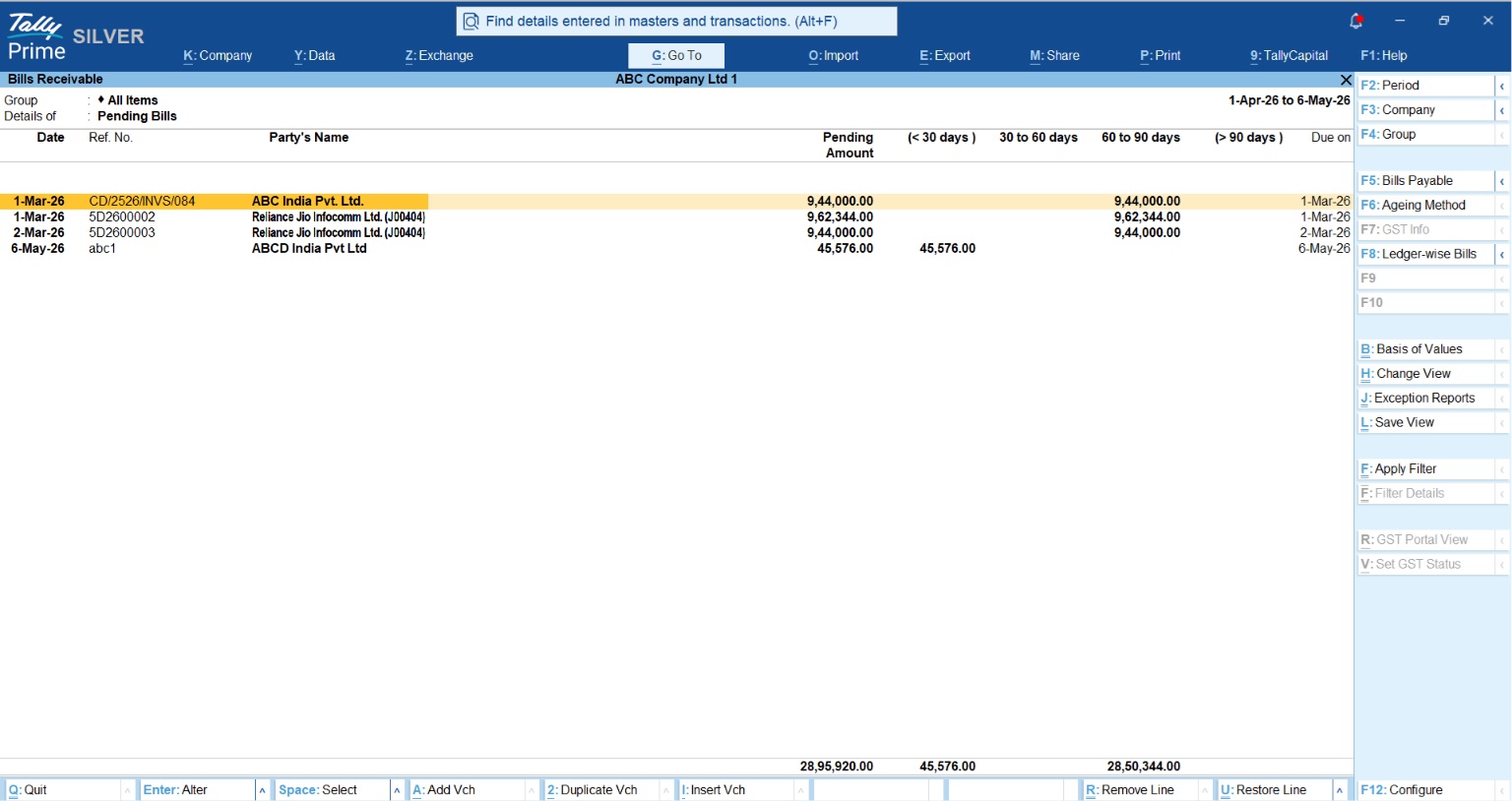
Generating a sales invoice does not mean the business has received payment. For businesses selling goods or services on credit, outstanding payment tracking is just as important as billing. As the number of customers increases, manually tracking unpaid invoices becomes difficult. Business owners need to know which invoices are overdue, how much each customer owes, and when payments are expected.
Consider a wholesale distributor selling goods worth ₹20 lakh every month. Sales may appear strong, but if several customers delay payments for 60 or 90 days, the business may struggle to pay suppliers or purchase new stock. A complete accounting system can help businesses monitor outstanding balances through customer ledgers, bill-wise details, and receivable ageing reports.
TallyPrime provides features such as:
- Bill-wise outstanding tracking for customer invoices.
- Customer-wise outstanding and ageing reports.
- Credit limits and credit period management.
- Receivable reports for payment follow-ups.
- Payment reminders and collection-related features, depending on the available configuration and services.
These features help business owners identify delayed collections and make better cash flow decisions.
Why Does Running Out of Stock Ruin Customer Trust? (Inventory & Warehouse Tracking)
Basic invoicing applications may offer simple stock tracking, which can work well for small shops with limited products. However, businesses dealing with multiple warehouses, manufacturing, batch-wise products, or large inventories often need more detailed stock management.
Without accurate inventory information, a business may accept an order for products that are no longer available or purchase items that are already overstocked. Important inventory management requirements include:
- Multi-Godown/Warehouse Management: Businesses operating across multiple locations need to track stock balances, movements, and transfers between godowns. TallyPrime supports godown-wise inventory tracking and stock transfers.
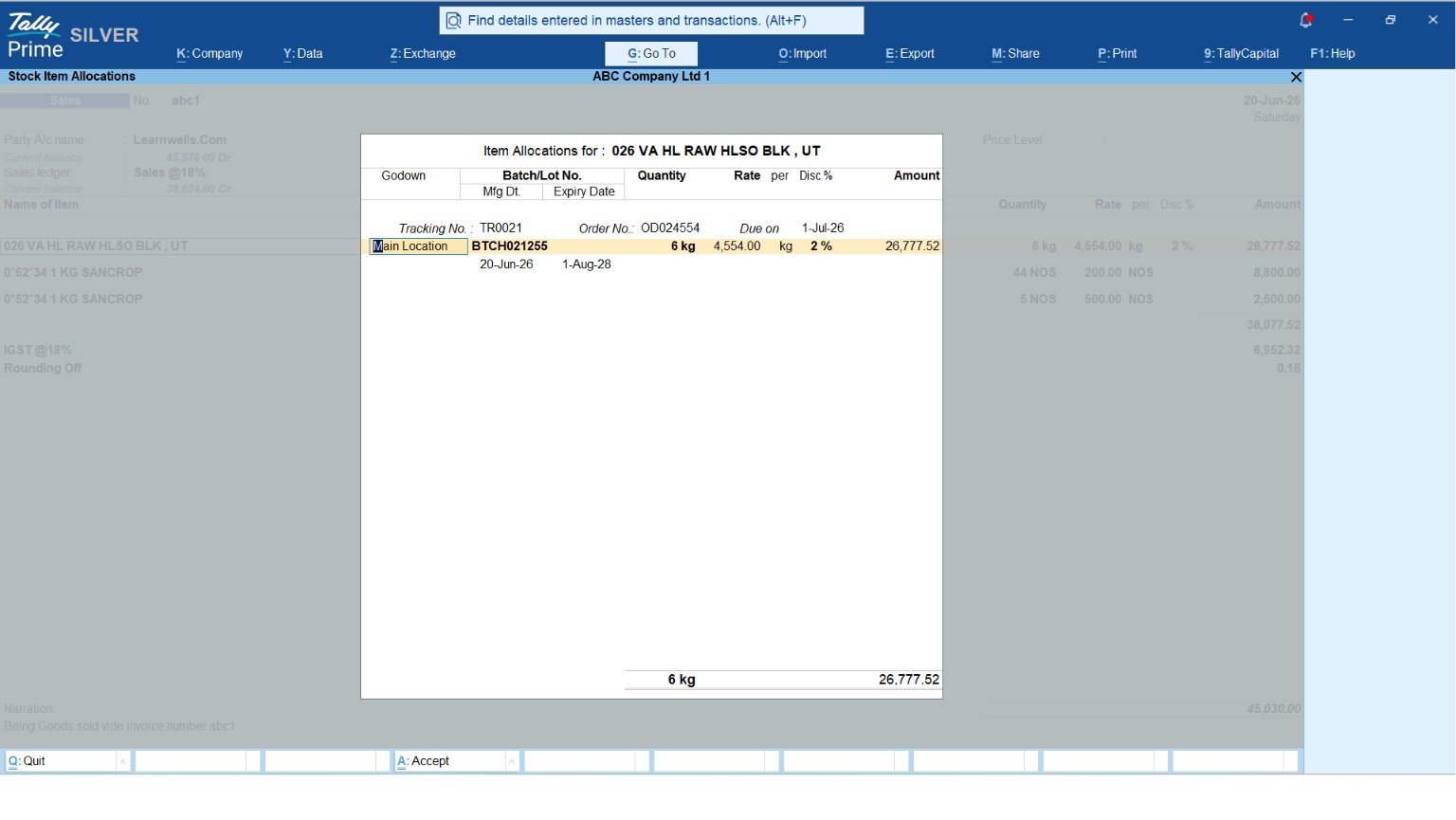
- Batch Tracking & Expiry Monitoring: Businesses dealing with medicines, FMCG products, and other batch-controlled goods need to maintain batch numbers, manufacturing dates, and expiry dates where applicable. TallyPrime supports batch-wise inventory management and expiry-related tracking.
- Bill of Materials (BOM) & Job Work: Manufacturing businesses need to monitor raw materials, production consumption, and finished goods. TallyPrime supports BOM-based manufacturing entries and job work processes.
For example, a pharmacy must track medicine batches and expiry dates, while a manufacturing company needs to monitor raw material consumption and finished goods. When inventory and accounting records are connected, businesses can monitor stock value, purchases, sales, and product profitability more effectively.
However, businesses should also evaluate whether they need additional features such as automatic replenishment, advanced warehouse management, or specialized production planning.
Is Your Business Ready for GST Scrutiny or an MCA Audit? (Compliance & Audit Trail)
GST compliance involves much more than printing GST invoices or preparing GSTR-1. Businesses must maintain accurate purchase and sales records, reconcile Input Tax Credit, review supplier invoices, and comply with applicable statutory requirements. As transaction volumes grow, managing these activities through separate spreadsheets becomes time-consuming and increases the possibility of errors.
GSTR-2B Matching & The New Invoice Management System (IMS)
GSTR-2B helps GST-registered businesses identify Input Tax Credit details based on information reported by suppliers and other applicable sources. Businesses should regularly compare their purchase records with GSTR-2B to identify missing invoices, incorrect GSTINs, mismatched tax amounts, and other differences.
The GST Invoice Management System (IMS) provides an additional way to review supplier-reported invoice details. IMS includes the following actions:
- Accept: Confirm an invoice for the applicable ITC treatment, subject to GST eligibility requirements.
- Reject: Reject an invoice that should not be accepted, such as an incorrect or duplicate document.
- Pending: Keep an eligible document pending for further verification. Pending invoices are excluded from the current period’s GSTR-2B and may be considered later within the applicable rules.
IMS also provides a No Action status. Documents for which no action is taken are generally treated as deemed accepted when GSTR-2B is generated, subject to the applicable IMS rules.
Therefore, it is not necessary to manually accept every supplier invoice. TallyPrime supports GST reconciliation and IMS-related activities, including reviewing supplier invoices, identifying mismatches, assigning action statuses, and exchanging supported information with the GST portal. This helps accounting teams manage ITC more efficiently, although the final eligibility of any credit must still be checked under GST law.
Read more about TallyPrime IMS System, Benefits for Small Businesses
Mandatory MCA Audit Trail (Edit Logs) & E-Invoicing Thresholds
Indian businesses must also consider other statutory requirements depending on their business structure and turnover.
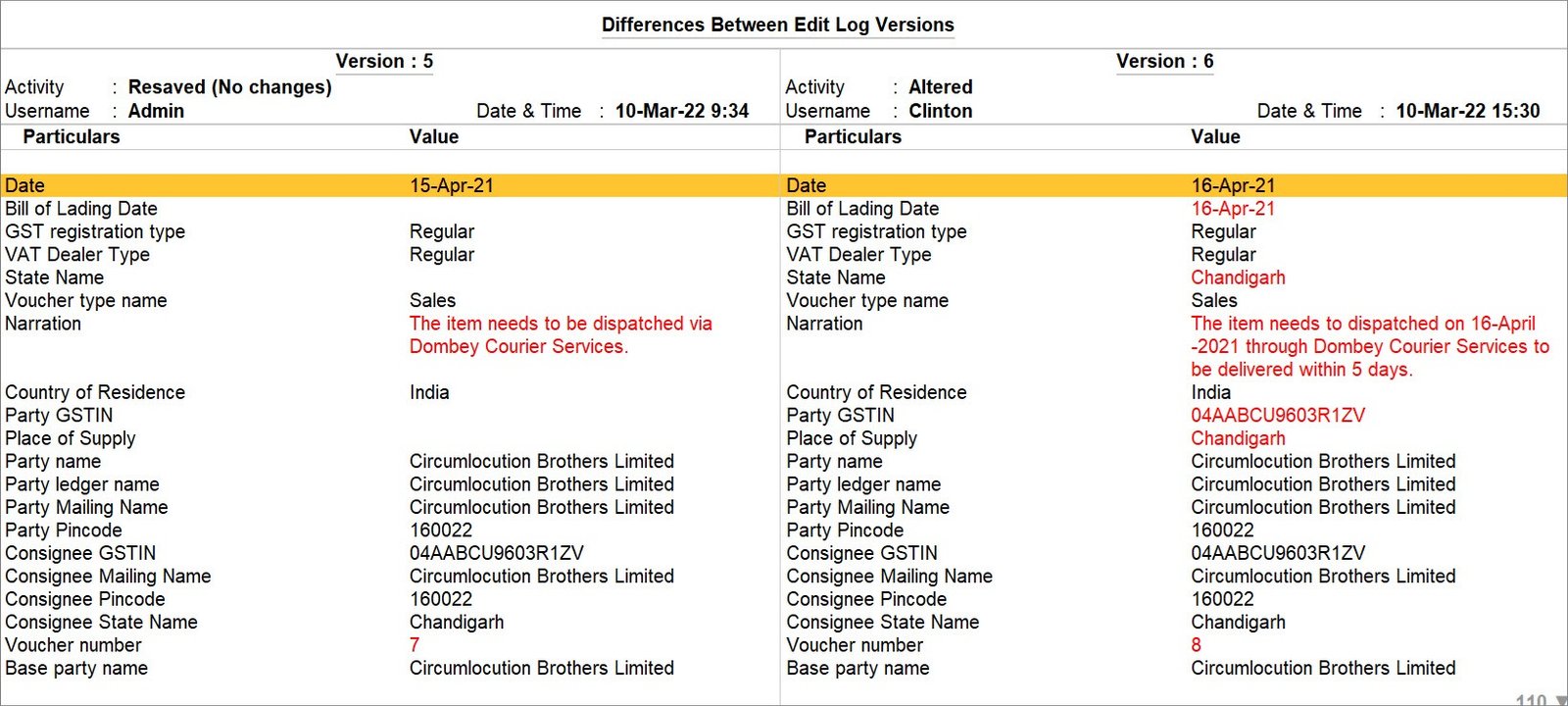
Mandatory MCA Audit Trail (Edit Log): Under Rule 3(1) of the Companies (Accounts) Rules, 2014, companies using accounting software must maintain an audit trail for financial years beginning on or after 1 April 2023. The software must record changes to accounting transactions and ensure that the audit trail cannot be disabled.
This requirement applies to companies covered by the relevant rules, not automatically to every proprietorship or partnership firm. TallyPrime Edit Log is designed to support these audit trail requirements.
E-Invoicing Requirements: GST e-invoicing generally applies to businesses with annual aggregate turnover of ₹5 crore or more in any applicable financial year from 2017–18 onwards, subject to notified exemptions and transaction rules.
Eligible businesses must report specified transactions to the Invoice Registration Portal (IRP) and obtain an Invoice Reference Number (IRN). TallyPrime supports direct e-invoice generation and retrieval of IRN and QR code details, helping reduce manual portal work.
| Compliance Feature | TallyPrime | Basic Billing Apps |
| GSTR-2B Reconciliation | Can provide purchase reconciliation, mismatch identification, and detailed reports. | May require manual downloads or provide limited reconciliation features. |
| GST IMS Support | Provides invoice review and IMS action management. | Depends on the application and available integration. |
| MCA Audit Trail (Edit Log) | Provides audit trail features required for covered companies. | Availability and compliance capabilities vary by software. |
| E-Invoicing (IRN Generation) | Generates e-invoices and retrieves IRN and QR code details. | Some applications support direct generation; others require external processes. |
Before choosing a business management software, businesses should verify whether it supports the statutory requirements applicable to them.
What Happens When Vendors Dispute Payments? (Payables & Section 43B(h) Rules)
Managing supplier payments is another important part of business accounting. When a business purchases goods or services on credit, it must track outstanding invoices, agreed payment terms, and due dates.
Without proper records, businesses may make duplicate payments, overlook supplier dues, or face disagreements over outstanding balances. For Indian businesses, MSME payment rules also make supplier payment tracking important.
The Section 43B(h) MSME Mandate
Section 43B(h) of the Income-tax Act, 1961 introduced specific tax deduction rules for delayed payments to qualifying micro and small enterprises. The relevant rules apply to qualifying payments to suppliers covered under the Micro, Small and Medium Enterprises Development Act, 2006.
- The Payment Timelines: Under Section 15 of the MSMED Act, payments must generally be made within 15 days where there is no written agreement. Where a written agreement exists, the agreed period cannot exceed 45 days.
- Tax Penalty: If a qualifying payment is delayed beyond the applicable MSMED Act timeline, the related expense may not be allowed as a deduction for that financial year under Section 43B(h). The deduction is generally available in the year of actual payment, subject to applicable tax provisions.
- The Impact: Delayed payments can increase taxable income for the relevant financial year and affect cash flow. Businesses should therefore maintain accurate supplier classifications, invoice dates, payment terms, and outstanding balances.
TallyPrime provides MSME-related supplier details and reporting features that help businesses monitor applicable outstanding dues. Proper configuration and accurate supplier information remain important.
Businesses can also explore financing options such as the Trade Receivables Discounting System (TReDS), where eligible, to support working capital management. A proper accounts payable system helps businesses maintain better supplier relationships and identify overdue payments before they become serious problems.
How Do AI and Automation Stop Manual Entry Errors? (OCR & Bank Feeds)
Manual data entry remains one of the most time-consuming activities in many accounting departments. Entering supplier bills, recording bank transactions, and matching GST information manually can take several hours, particularly when transaction volumes are high. Modern accounting software and automation tools help reduce this workload.
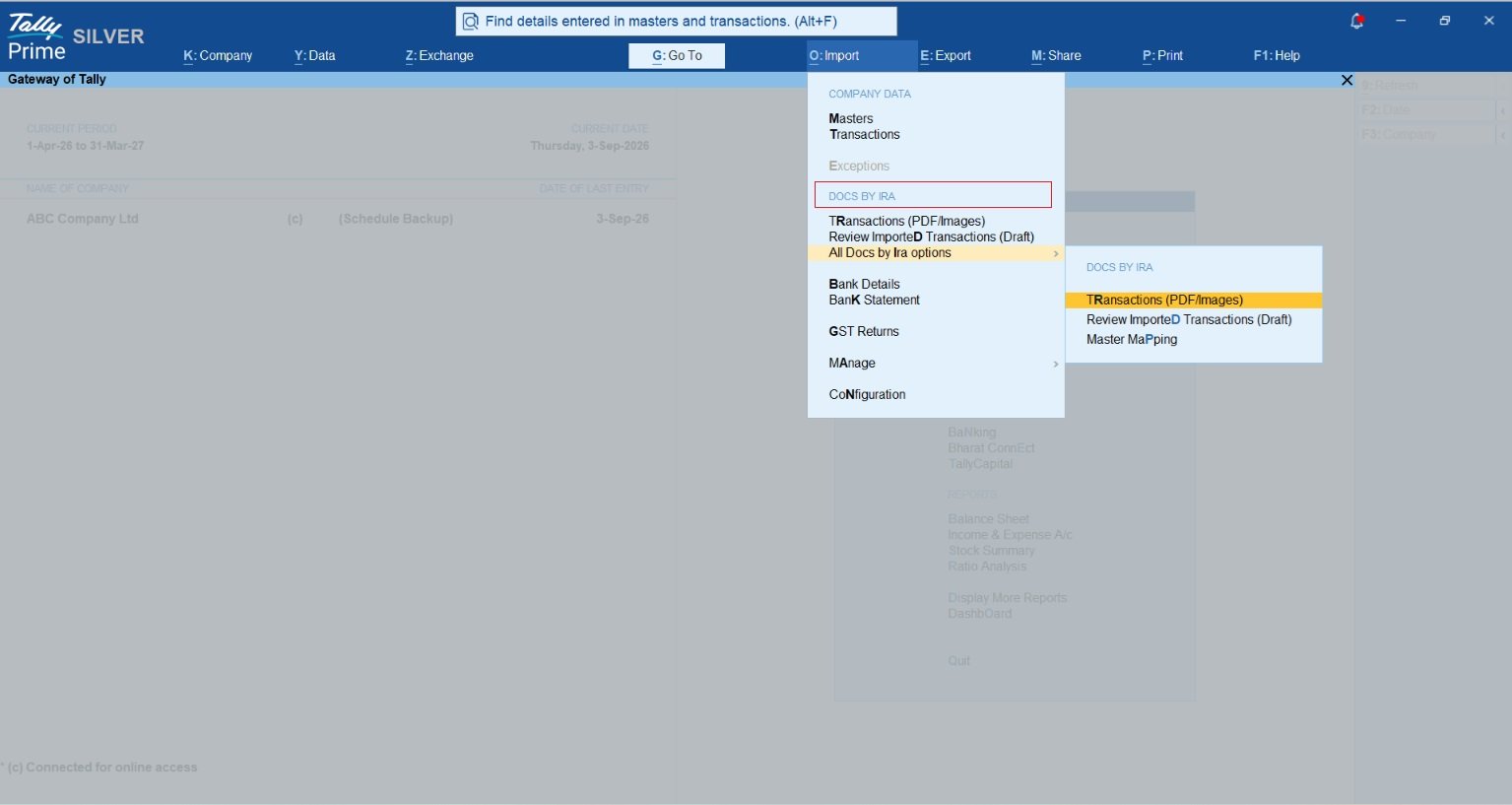
- AI OCR Invoice Scanning: AI-powered document processing tools can extract details from supported invoices, including supplier names, GSTINs, invoice numbers, taxable amounts, and other information. For example, Docs by Ira works with TallyPrime to extract information from supported business documents and prepare draft transactions. Accountants can review the extracted details, correct errors, and convert verified drafts into accounting vouchers.
- Automated Bank Reconciliation: TallyPrime supports bank statement imports, automated reconciliation, and Connected Banking services for supported banks.The software can identify matching transactions, suggest possible matches, and help accountants create vouchers for bank transactions that are not yet recorded in the books.
These features reduce repetitive work, but automation does not completely eliminate errors. Extracted information and suggested matches should be reviewed before finalizing accounting records. With the right automation tools, businesses can improve processing speed, reduce manual entry, and maintain more reliable accounting information.
Practical Framework: Has Your Business Outgrown Basic Billing?
Use this checklist to evaluate whether your existing billing software is still meeting your business requirements.
- Statutory Compliance Thresholds: Your business has reached the applicable e-invoicing turnover threshold of ₹5 crore or more in any relevant financial year, subject to exemptions, and requires IRN generation for eligible transactions.
- MSME Payables Risk: You purchase goods or services from qualifying micro and small enterprises and need better tracking of payment deadlines under the applicable MSMED Act and income-tax provisions.
- Complex Inventory Demands: You manage multiple godowns, batch numbers, expiry dates, manufacturing processes, or stock transfers.
- Tax Audit & Scrutiny Exposure: Your accounting team frequently identifies GSTR-2B mismatches, struggles with GST IMS actions, or needs more detailed accounting and audit reports.
- Excessive Operational Workload: Your employees spend considerable time manually entering purchase bills, reconciling bank statements, following up on customer payments, or preparing financial reports.
If two or more of these situations apply, it may be time to evaluate whether your current software provides the accounting and operational features your business needs. This does not necessarily mean replacing your software immediately. Businesses can first review existing features, available integrations, and additional automation options.
Conclusion & Actionable Next Steps
Basic invoicing software can be a practical starting point for small businesses. However, as operations expand, business owners need better visibility into outstanding payments, inventory, supplier dues, GST compliance, and financial performance. Choosing suitable accounting software is not simply about generating invoices faster. It is about maintaining accurate records and making better business decisions.
For Indian businesses, TallyPrime provides integrated accounting, inventory management, GST compliance, banking, and financial reporting capabilities. Additional automation tools such as Docs by Ira can further reduce manual data entry. Still, software alone cannot guarantee compliance. Businesses should maintain accurate records, review statutory requirements, and seek professional advice when needed.
Tax audit applicability also depends on the relevant provisions, business turnover, cash transaction percentages, and other conditions. For businesses under the general tax audit provisions, the threshold may be ₹1 crore or ₹10 crore, depending on the prescribed cash receipt and payment conditions. Other provisions can also affect audit applicability.
Take Control of Your Financial Operations:
- Automate your tax filing workflows with suitable GST reconciliation software to identify purchase mismatches, review ITC details, and prepare accurate GST returns.
- Experience seamless AI data entry, bank mapping, and better compliance management by exploring TallyPrime and compatible automation tools. Businesses can evaluate available demonstrations, trials, and professional customization services before selecting the right solution.
“Basic billing software helps you create invoices. A complete accounting system helps you understand your cash flow, control inventory, monitor profitability, and manage business compliance.”
Also read AI vs Manual Bookkeeping: A Practical Cost-Benefit Breakdown for Indian SMEs
Frequently Asked Questions (FAQs)
What is the simplest accounting software for a small shop in India?
A small shop can start with TallyPrime for invoicing, accounting, inventory management, and GST compliance. It offers essential features for small businesses, along with advanced capabilities they can use as their business grows.
Is TallyPrime mandatory for GST return filing?
No. TallyPrime is not mandatory for GST return filing. Businesses can use the GST portal directly or choose suitable GST-compliant accounting software. However, TallyPrime supports GST return preparation, reconciliation, filing, and relevant online GST activities.
What is the MCA Audit Trail rule for Indian companies?
Under the Companies (Accounts) Rules, 2014, companies using accounting software must maintain an audit trail that records changes to accounting transactions and cannot be disabled. The requirement applies from financial years beginning on or after 1 April 2023.
What is the e-invoicing threshold for Indian SMEs?
The notified GST e-invoicing threshold is ₹5 crore or more in annual aggregate turnover in any applicable financial year from 2017–18 onwards. E-invoicing applies to eligible transactions and taxpayers, subject to the notified exemptions.
Can TallyPrime support my business as it grows?
Yes, TallyPrime is suitable for both small and growing businesses. You can start with basic invoicing and accounting, then use advanced features such as inventory management, GST compliance, financial reporting, and multi-location business management as your business expands.
